
“Fast” support is no longer enough. Today’s customers expect instant resolutions, not just quick replies.
Traditional helpdesks are struggling, with high ticket volume leading to slow responses, agent burnout, and frustrated customers.
AI is changing that, not as an add-on but as the core of modern support.
With agentic AI, support teams are shifting from long, back-and-forth conversations to near-instant resolutions. Many businesses now see 40–60% faster response times.
The 10x effect can be achieved by doing more in less time, which is a straightforward concept.
- Instant conversation summaries
- Accurate answers in seconds
- Proactive issue resolution
What once took 45 minutes can now be solved in under 2 minutes, that’s the 10x shift.
This blog will teach you how to choose the best AI-powered service software for your company's needs.
What is AI-Powered Customer Service Software?
At its core, AI-powered customer service software uses technologies like natural language processing (NLP), machine learning, and generative AI to automate and improve customer support.
Think of it as a smart support agent that works 24/7, handles queries efficiently, and gets better with every interaction.
Unlike older rule-based chatbots, modern AI understands context, intent, and tone by making responses more accurate and useful.
Here’s what it can actually do:
- Write replies that match your brand voice
- Summarize long, messy conversations in seconds
- Detect urgency (or frustration) and prioritize tickets
- Take actions like updating your CRM or fixing simple requests
What Can Modern AI Customer Service Platforms Do?
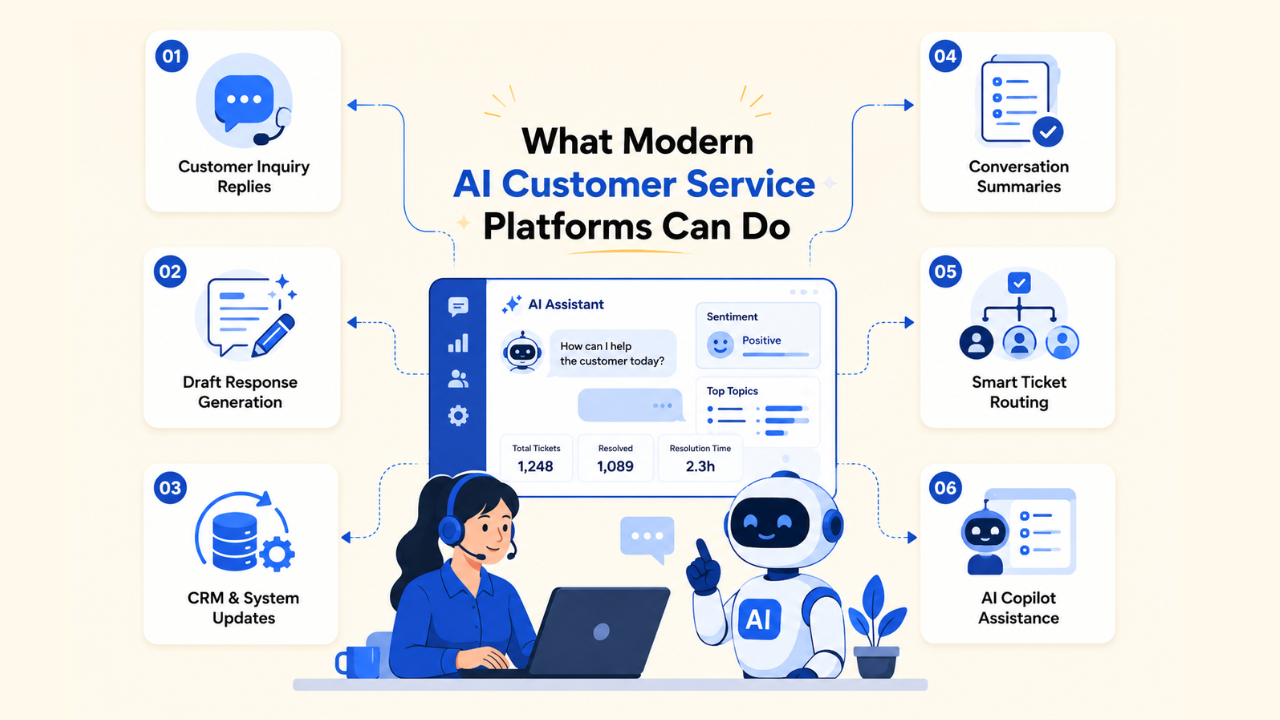
A. Reply to customer inquiries
Autonomously answer common questions (shipping status, password resets, refund policies) without any human involvement.
Assistance of helpira AI handles communication, while detailed analytics and sentiment analysis assist businesses in understanding customer needs.
B. Write draft replies to requests
For more complex issues, AI-powered customer service software prepares a clear, context-aware reply that agents can quickly review and send.
C. Update information in other systems
Top-tier AI-powered customer service platforms can take real actions: update a CRM record, process an order change, or issue a refund directly from the conversation.
D. Summarize information
Long, messy conversations get turned into short summaries, so agents can jump in without reading everything from the start.
E. Route, prioritize, and escalate the ticket
AI classifies incoming tickets by intent, urgency, and sentiment, then routes them to the right queue or agent automatically.
F. Help your agents reply to inquiries
Through an AI Copilot that surfaces relevant knowledge base articles, past similar tickets, and suggested replies, all in a sidebar while the agent types.
9 AI-Powered Customer Service Software to Supercharge Your Team
1. Helpira
The "rising star" Helpira was created especially to fill the gap between basic automation and intricate agency requirements. Sentiment-driven automation is the main focus of this all-in-one AI help desk.
You feed it your refund policies, shipping timelines, FAQs, and product guides, and it uses that content to draft accurate, on-brand responses to incoming tickets.

Pros
➕ Easy to set up, teams can get started in hours
➕ Affordable for growing businesses
➕ Maintains consistent tone and brand voice
➕ Good fit for agencies offering support setups
Cons
➖ Limited deep omnichannel integrations
Ideal for: Agencies and growing SMBs looking for a cost-effective, high-IQ helpdesk.
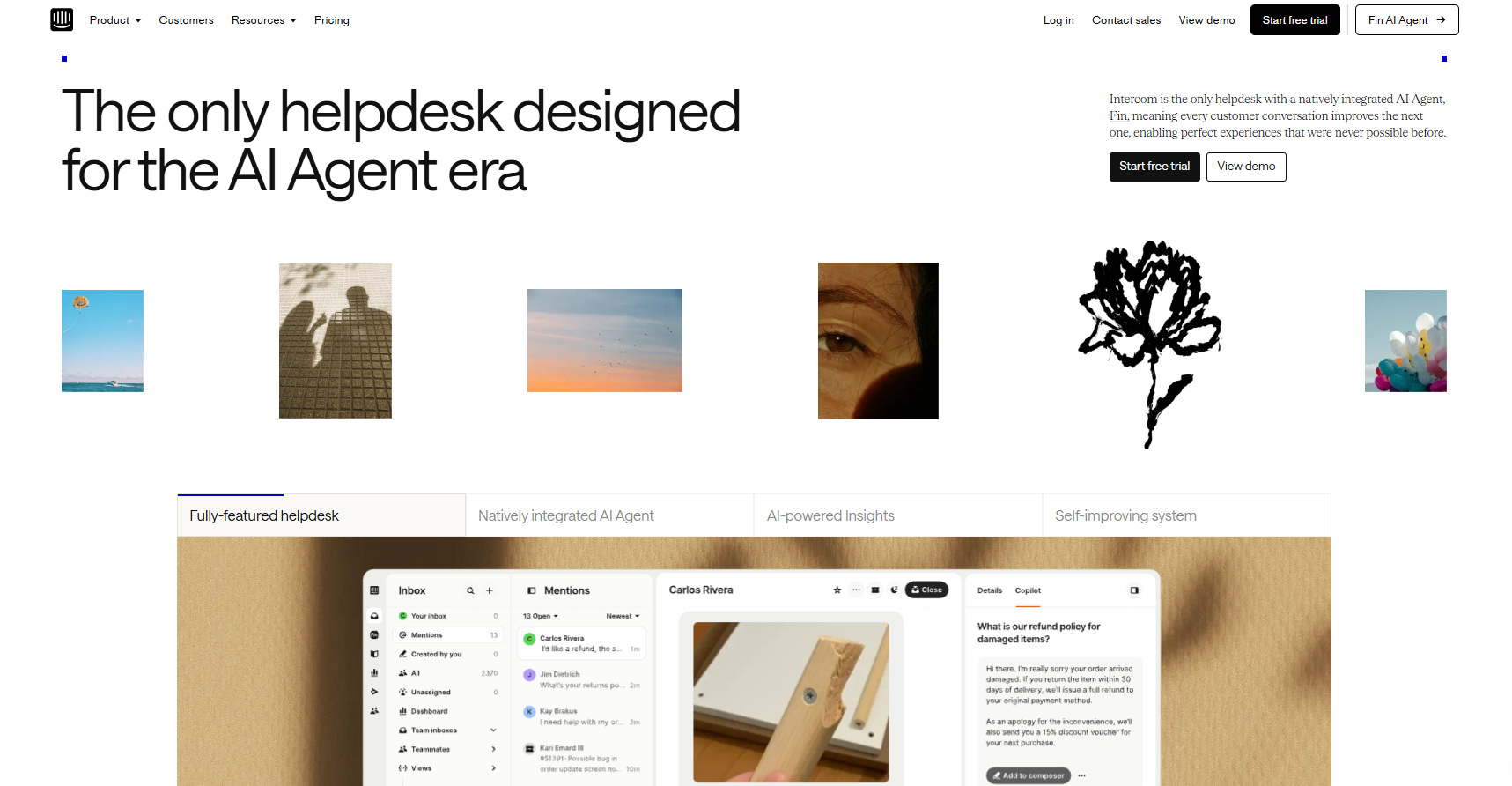
2. Intercom (Fin AI)
With a Copilot for support teams and a customer-facing agent, Intercom's Fin AI has developed into a potent AI help solution.
This customer-facing agent is paired with Fin AI Copilot for agents via an intercom, which allows for real-time context surfacing and response drafting on a single platform.
Pros
➕ Strong conversational AI
➕ Quick setup with existing knowledge base
➕ Regular feature updates
➕ Well-suited for SaaS teams
Cons
➖ Pricing increases with usage
➖ Can struggle with complex queries
➖ May feel heavy for basic needs
Ideal for: SaaS companies that prioritize performance and advanced features.
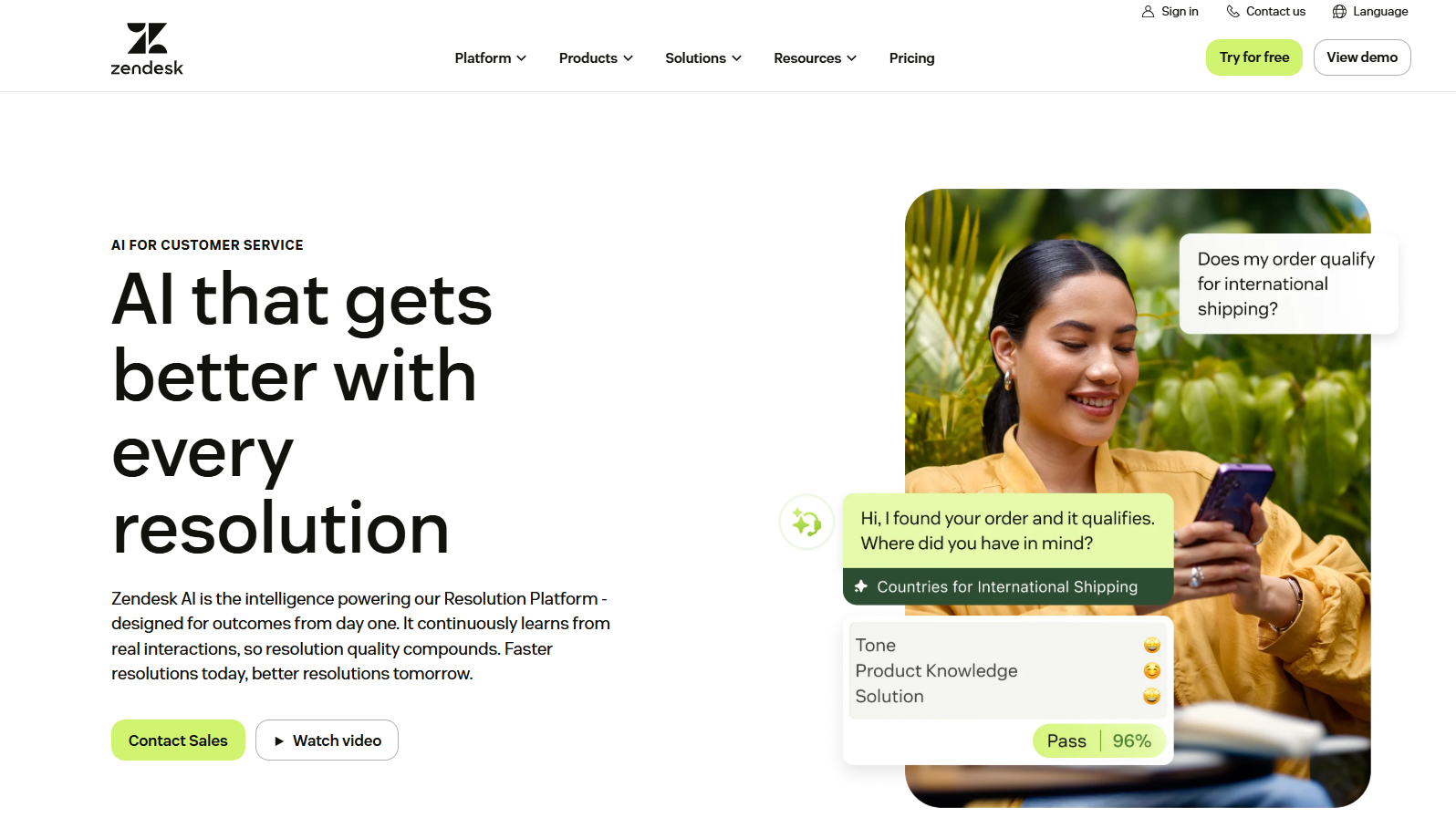
3. Zendesk AI
Zendesk has transitioned from a ticketing system to an "AI-First" platform. Their Advanced AI add-on provides pre-trained models that recognize the specifics behind customer complaints.
By automating tickets, providing real-time assistance to agents, and integrating with business tools, it lessens workload.
Pros
➕ Strong ecosystem with deep integrations
➕ Advanced automation and analytics
➕ Enterprise-level security and reliability
➕ Scales well for large teams
Cons
➖ Expensive at higher tiers
➖ Setup can be complex for beginners
➖ Support may slow down at scale
Ideal for: Large enterprises with complex, high-volume support needs.
4. Freshworks (Freddy AI)
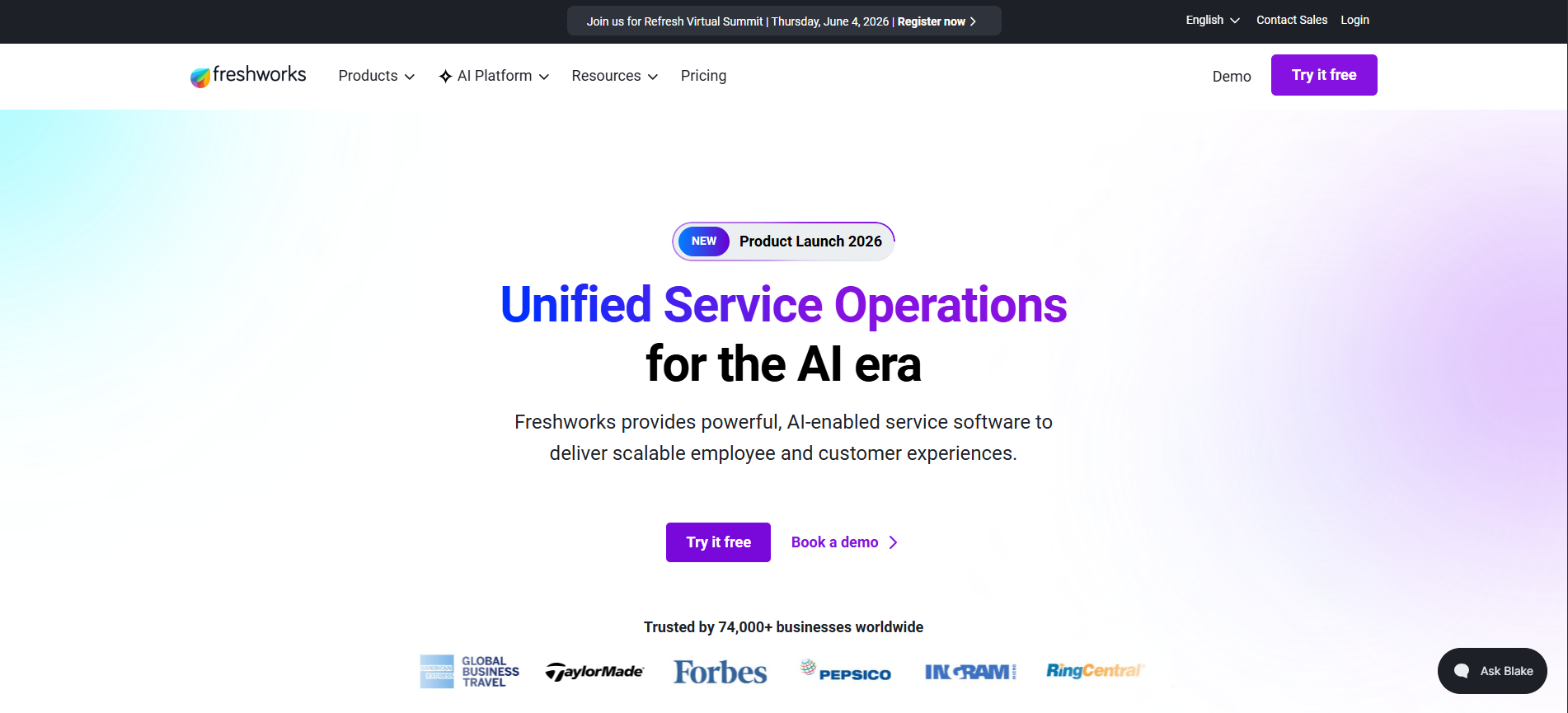
A strong and reasonably priced support solution is provided by Freshworks. Its AI, Freddy, is built into the workspace to automate ticket handling, suggest replies, and resolve issues before agents step in.
It focuses heavily on "Agent Copilot," helping human staff work faster by suggesting the next best action.
Pros
➕ Good value for money
➕ Easy to set up and use
➕ Useful automation insights
Cons
➖ Advanced AI features require higher plans
➖ Less powerful for very large enterprises
Ideal for: Mid-market companies that want to empower their human agents with AI.
5. Hiver
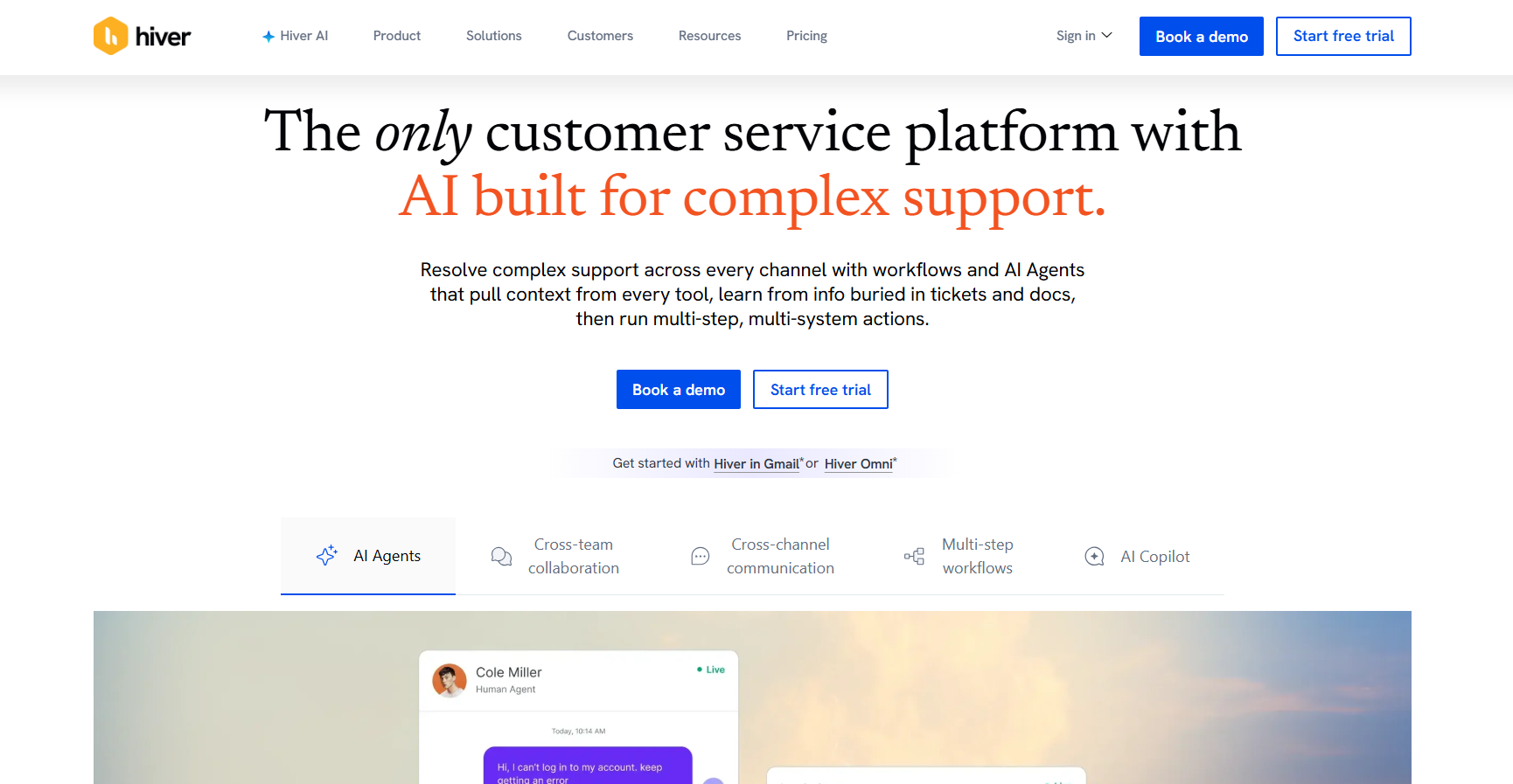
If your team lives inside Gmail, Hiver makes things simple, it turns your inbox into a full AI-powered helpdesk without needing to switch tools. Its AI adds context to conversations, automates routine queries, and keeps everything within a familiar email workflow.
Pros
➕ No migration, works directly inside Gmail
➕ Quick setup with minimal learning curve
➕ Easy for email-first teams to adopt
➕ Affordable for freelancers and small teams
Cons
➖ Limited for complex, enterprise-level workflows
➖ Advanced AI features are locked behind higher plans
Ideal for: Teams that want to stay in their email inbox but need AI speed.
6. Kustomer
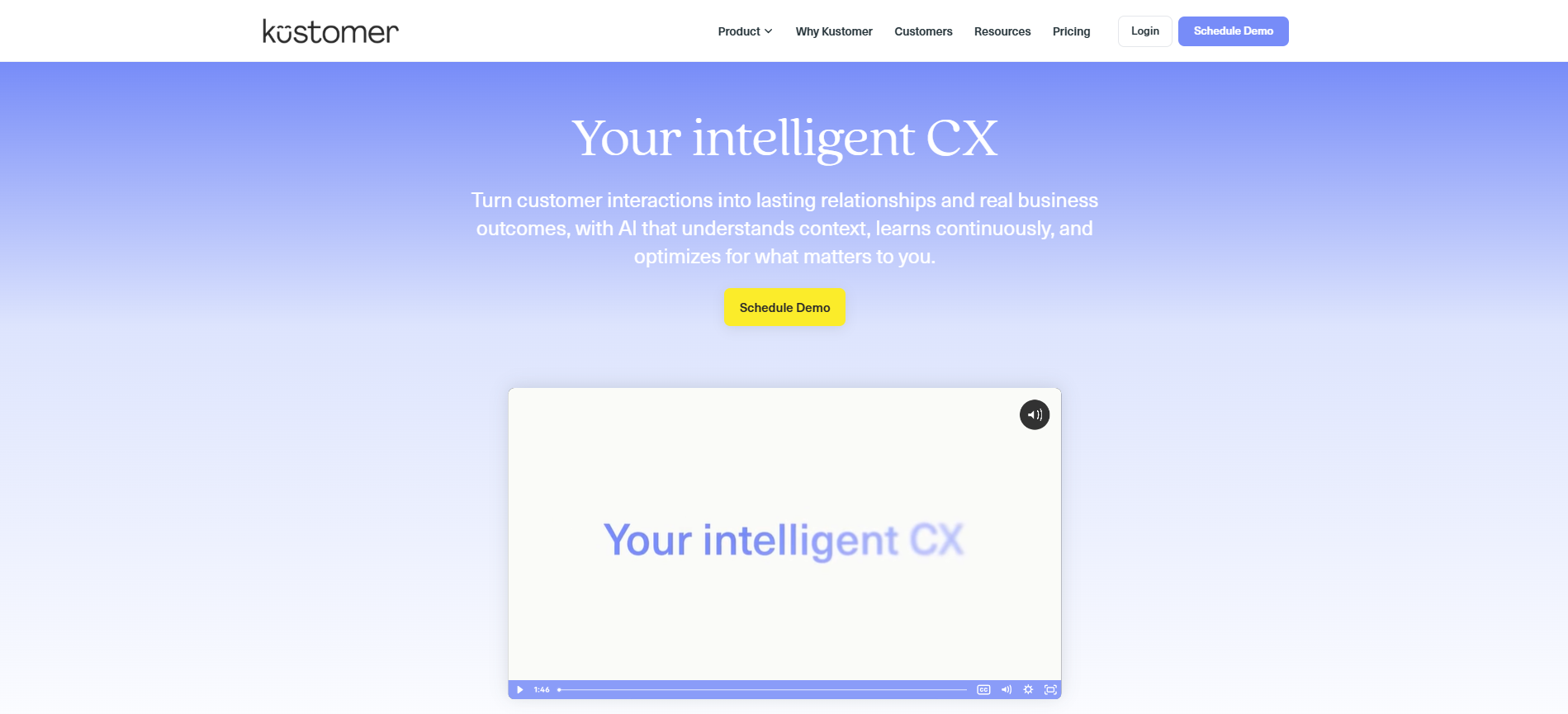
Kustomer takes a different approach, it puts the customer profile at the center of everything.
Its AI looks at the entire customer journey, including past interactions, purchases, and behavior, to deliver more personalized and context-rich support. With a built-in CRM, every response is backed by real customer data.
Pros
➕ Deep customer insights for personalized support
➕ Built-in CRM reduces the need for extra tools
➕ Strong for high-volume support teams
➕ Great integration with social and messaging channels
Cons
➖ Higher pricing compared to SMB tools
➖ Can feel complex for smaller teams
➖ Requires setup to fully use CRM capabilities
Ideal for: D2C and E-commerce brands where customer history is key.
7. Balto
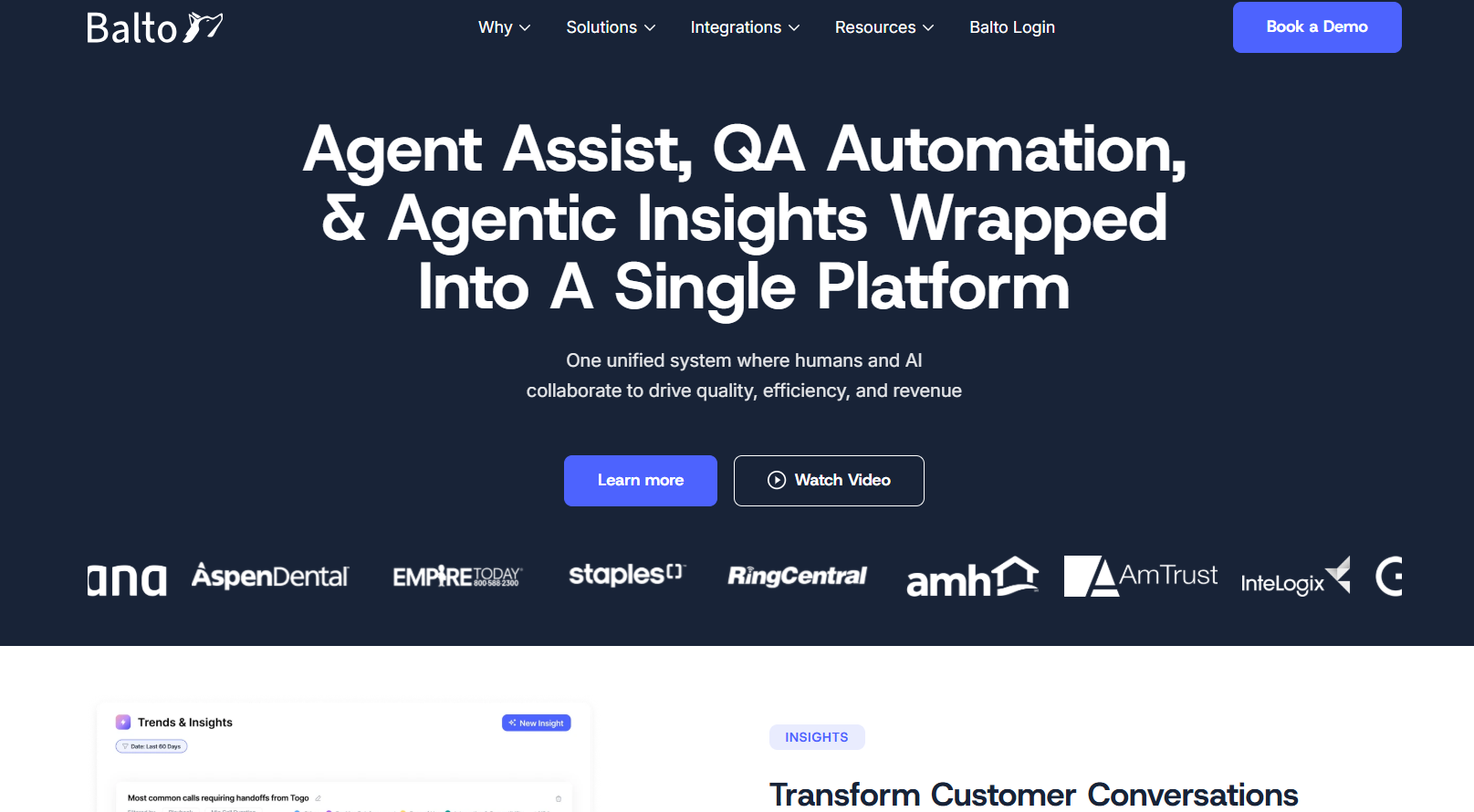
If your support relies heavily on phone calls, Balto focuses on one thing real-time guidance during live conversations. It listens to calls as they happen and prompts agents with what to say next, helping them stay on track and handle queries more effectively.
Pros
➕ Built specifically for call center environments
➕ Speeds up agent training and improves performance
➕ Strong compliance support for regulated industries
➕ Proven impact on customer satisfaction and efficiency
Cons
➖ May struggle with highly complex or unscripted calls
➖ Requires setup for CRM integrations
Ideal For: Call centers, sales teams, and businesses that rely heavily on phone-based customer support.
8. Callsi
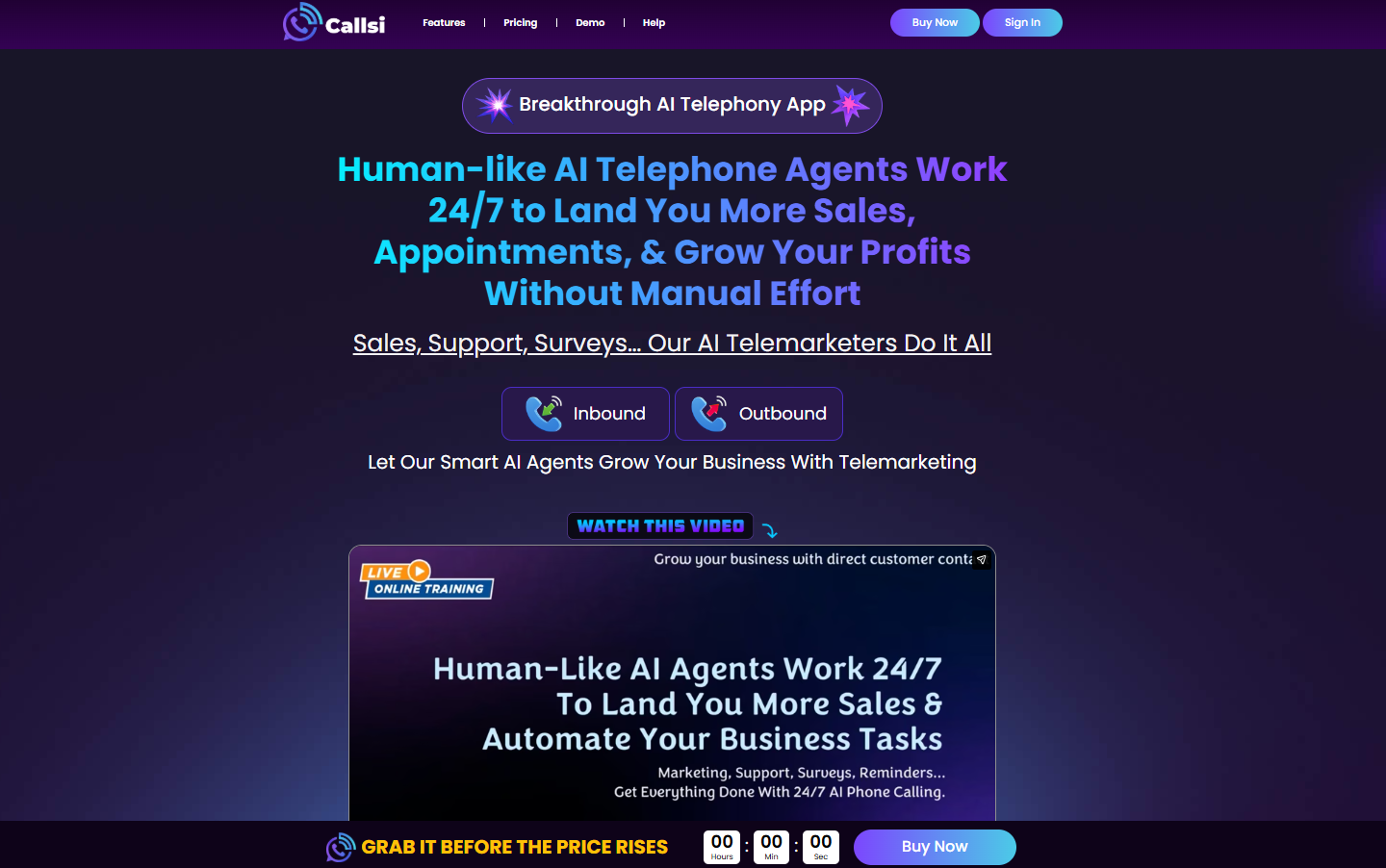
Need someone to handle calls even after hours? Callsi acts like a 24/7 AI phone assistant that can manage both inbound and outbound calls without sounding robotic.
It can answer calls, qualify leads, book appointments, run surveys, and even follow up with SMS, making sure you don’t miss opportunities when your team is offline.
Pros
➕ Reduces the need for a full-time call center team
➕ Integrates with Twilio for global calling
➕ Provides full call transcripts for easy review
➕ Delivers natural, human-like conversations
Cons
➖ Primarily focused on voice interactions
Ideal for: Local service businesses, real estate teams, and agencies that rely on phone outreach to generate leads.
How to Implement AI-Powered Customer Service Without Losing the "Human Touch"
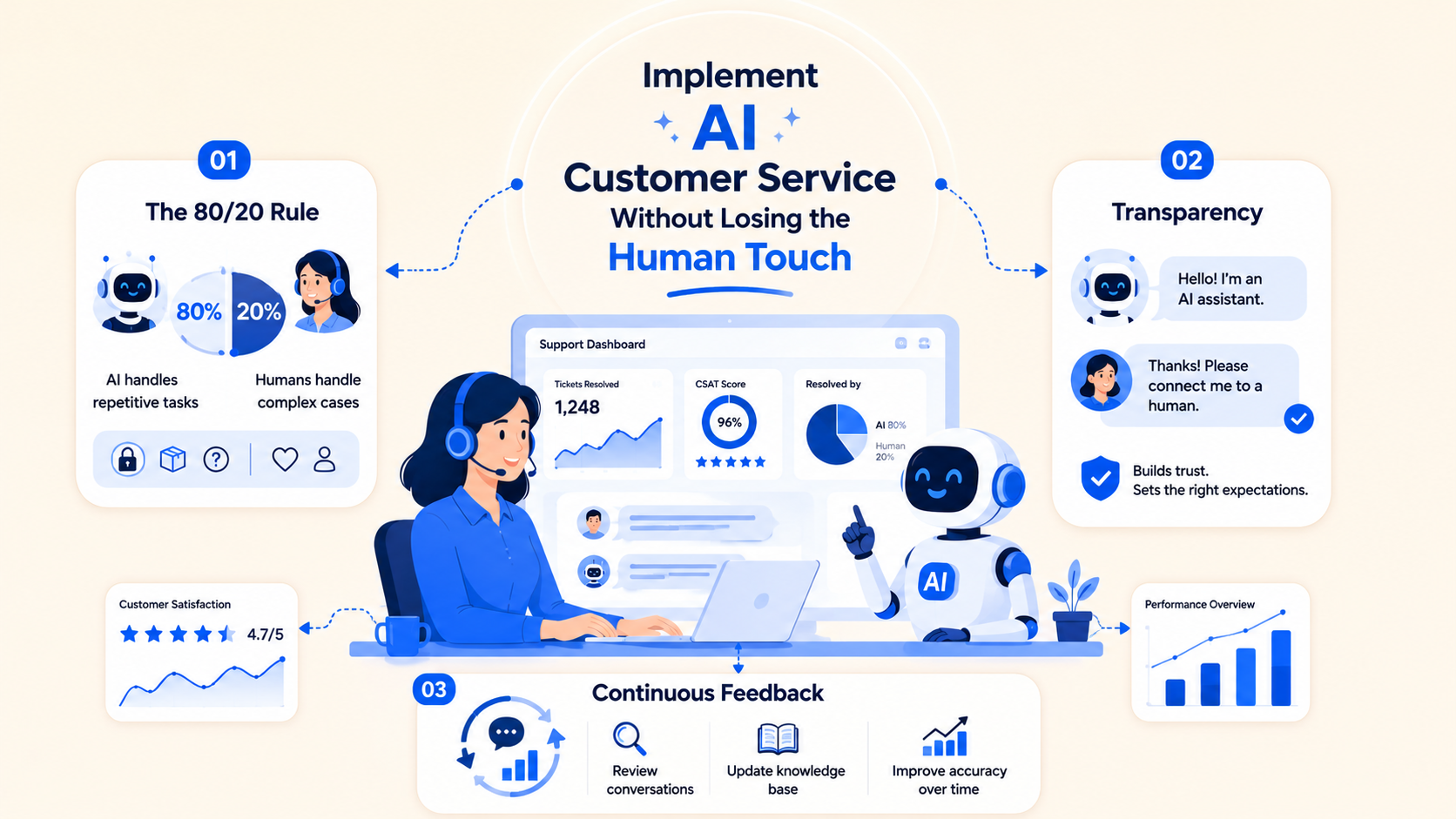
One common concern with AI in support is that it may feel robotic. That only happens when it’s used the wrong way. The key is balance.
A. The 80/20 Rule
Use AI for 80% of repetitive tasks, like password resets, order updates, and basic queries, and human agents handle the 20% complex cases that need empathy, judgment, and personal touch. attention.
This approach doesn’t just improve experience, it boosts performance. Teams that rely fully on AI often see lower satisfaction, while those using it strategically achieve higher CSAT and better efficiency.
B. Transparency
Be clear when customers are talking to AI, therefore, it builds trust and sets the right expectations.
People are fine with AI-powered customer service as long as it’s honest and helpful. A brief statement such as "Hello, I'm an AI assistant, or can I help or connect you to a human if needed?" has a significant impact.
C. Continuous Feedback
Since AI is not a one-time setup, it gets better with frequent adjustments. Review conversations often, especially where AI failed or escalated unnecessarily.
Use those insights to refine responses, update your knowledge base, and improve accuracy over time. Even a quick weekly review can significantly boost performance.
Conclusion
The 10x speed boost isn’t hype, it comes down to choosing the right tool for your workflow.
AI-powered customer service is no longer optional. It’s quickly becoming the baseline. Teams still relying only on manual ticketing are already slower, more expensive to run, and more likely to lose customers.
So, which tools stand out?
- If you want an affordable, all-in-one solution, Helpira is a strong pick for 2026
- If for accuracy and depth matter most, Intercom Fin continues to lead
- And for businesses that depend on calls, outreach, or lead qualification, Callsi is worth exploring
What’s really changing isn’t just cost, it’s the experience.
Early adopters of AI support aren’t just saving on headcount. They’re delivering faster, smoother interactions that customers actually remember.
And in a market where products and pricing often look the same, experience is what wins.businesses
FAQs about AI Powered Customer Service Softwares
Q: What is the duration required to train an AI support tool?
A: Modern tools like Intercom or Helpira can start answering questions in minutes just by crawling your website or help center.
Q: Is it possible for AI-powered customer service software to completely replace human agents?
A: Not really. AI can handle around 55–70% of routine queries, but complex issues, emotional conversations, and sensitive cases still need human support.
Q: So how fast can AI improve response time?
A: In many cases, businesses see response times improve by up to 10x, especially for repetitive queries.